
 Save $159.50
Glass Kilns
Compare kilns by craft, chamber size, and the power available in your studio.
Save $159.50 Save $159.50
 Save $132.00
 Save $132.00
 Save $440.00
 Save $363.00
 Save $159.50
 Save $1,480.90
 Save $526.02
 Save $576.59
 Save $952.78
 Save $726.40
 Save $1,181.63
 Save $643.95
 Save $374.00
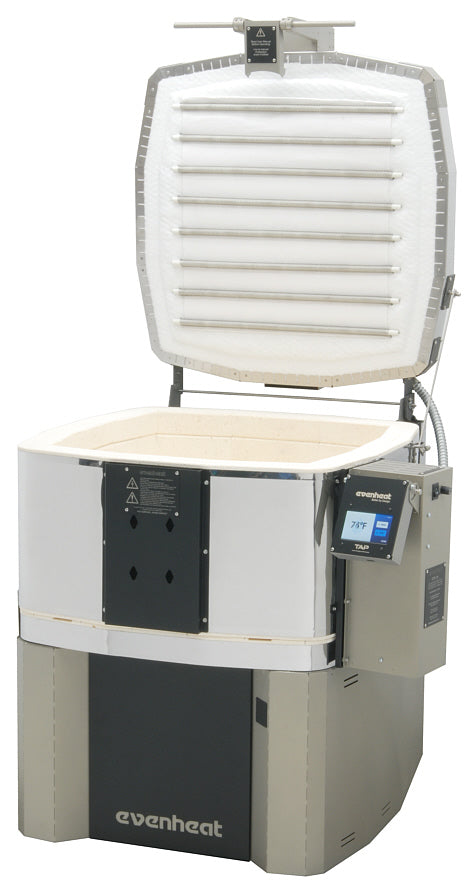
Glass Kilns
Glass Kilns For Sale
Fusing, slumping and annealing kilns from Evenheat, HotShot, Olympic and Paragon. Bench-top 120V units up to 23 inch studio kilns, with flat-rate freight.
21Glass Kilns
4Brands Stocked
LiftgateIncluded When Needed
Buying Guide
How to choose a glass kiln
Glass kilns are built differently from pottery kilns. They run cooler, usually topping out between 1650F and 1800F rather than 2350F, and most place the heating elements in the lid so heat radiates down onto the face of the piece. That is what produces an even full fuse or a fire-polished surface.
This collection holds 21 glass kilns from Evenheat, HotShot, Olympic and Paragon, from a 0.17 cubic foot bench-top unit at $1,184 up to large studio kilns. Most of the smaller models run on a standard 120V circuit, which makes glass an easier craft to set up at home than high-fire pottery.
Working in other materials too? See ceramic kilns, burnout and jewelry ovens, or the full electric kiln range.

Why buy your glass kiln from us
We sell all four brands, so we have no reason to push you toward one.
Freight quoted up front
Discounted flat-rate freight calculated at checkout before you buy, based on the kiln's size and your region. Curbside delivery, appointment scheduling and tracking are included, with liftgate service when the delivery requires it.
Matched to your process
Fusing, slumping, vitrigraph and bead annealing all ask different things of a kiln. Tell us what you make and we will tell you which of these will actually do it.
Price match guarantee
Find the same kiln advertised for less by an authorized dealer and we will match it. Details on our price match page. No sales tax outside Georgia.
Test firing does not void returns
The manufacturer's recommended initial test firing will not automatically void a return, provided the remaining conditions are met. Read the full terms on our returns page.
Shop glass kilns by shelf size
For glass, the number that matters is how wide a piece you can lay flat. Start there.
Up to 12 in
Bench-top, $1,184 to $1,852
Jewelry, cabochons, small dishes and test tiles. These run on a standard 120V circuit and sit on a workbench, so no electrician is involved.
Shop bench-top14 to 15 in
Mid format, $1,305 to $2,024
Plates, sushi trays, small panels and slumped bowls. The most common size for a hobby or part-time glass studio.
Shop mid format16 in and up
Large format, $2,446 to $3,572
Larger panels, multiple pieces per firing and production work. Expect a bigger footprint, and 240V on the largest models.
Shop large formatCHECK
THE TOP
TEMP
THE TOP
TEMP
Not every glass kiln reaches the same temperature, and the gap matters
Glass kilns in this collection range from 1650F to 2000F, and brand marketing often quotes the top of a line rather than the model in front of you. The Evenheat Studio Pro 14 and Studio Pro 17 are rated to 1650F, while the Studio Pro STP and GTS 23 reach 1800F and the Paragon SC2 reaches 2000F. Full fusing generally asks more of a kiln than slumping does, so match the rating to the hottest thing you actually do. Not sure? Call us at (470) 264-3563 and tell us your schedule.
Still narrowing it down?
These collections slice the same catalog a different way.
Related collections
Glass work overlaps several other categories.
Ceramic Kilns
Higher-temperature kilns for stoneware and porcelain, cone 5 through cone 10.
Burnout & Jewelry Ovens
For lost wax casting, PMC and metal clay work alongside glass.
All Electric Kilns
Every electric kiln we carry, across all four brands and every craft.
Kiln Controllers
Digital controllers and replacement parts for programmed firing schedules.
Glass kiln FAQs
The questions we get asked on the phone most often.
What temperature do I need for glass fusing?
It depends on the result you want. Slumping and tack fusing happen lower, a full fuse happens higher, and the exact numbers vary by the glass you use. Always work from the glass manufacturer's published schedule rather than a general rule.
What matters when buying is headroom. Every kiln in this collection is rated between 1650F and 2000F, so check the rating of the specific model against the hottest step in your schedule, not against the brand's advertised range.
Should the elements be in the lid or the sides?
For flat fusing, lid elements are the usual choice. Glass absorbs radiant heat mainly on the surface facing the element, so heat coming down onto the face of the piece is what brings the top surface to a full fuse or a fire-polished finish.
Side-fired designs heat the perimeter of the load first, which can leave the center of a wide flat piece cooler than its edges. They suit deeper vertical loads and slower slumping work. Some kilns use both: the Olympic Square 149GFE fires a lid element for the fusing segment and body elements for ramping and annealing.
What size glass kiln do I need?
Measure the largest flat piece you want to make, then add clearance on every side. You cannot fill a shelf edge to edge.
As a guide: up to 12 inches covers jewelry, cabochons and small dishes. Fourteen to fifteen inches covers plates, trays and small panels. Sixteen inches and up is for larger panels and firing several pieces at once.
Can I use a pottery kiln for glass?
Sometimes, but it is a compromise. Pottery kilns are built to reach far higher temperatures and usually fire from side elements, which is the wrong heat direction for flat fusing and can give you an uneven result across a wide piece.
They also tend to have thicker walls and heavier mass, which makes the fast, precisely controlled ramps and holds that glass work needs harder to achieve. If glass is your main craft, buy a kiln built for it.
Do I need a 240V circuit for a glass kiln?
Often not, which is one of the reasons glass is easier to set up at home than high-fire pottery. The Evenheat Studio Pro STP, Studio Pro 14 and Studio Pro 17, the HotShot HS-12G and HS-16G, the Olympic Champ XL and the Paragon SC2 all run on 120V.
Larger models do need 240V. The Evenheat GTS 23 draws 30A at 240V on a NEMA 6-50 plug. Check the product page for the specific model before you order.
What is a clamshell glass kiln?
A clamshell opens from the front on a hinge, so the whole lid lifts away and you load onto a shelf at working height instead of reaching down into a chamber. The HotShot HS-12G and HS-16G work this way.
Evenheat's Studio Pro models offer both front and top access, which the manufacturer calls dual access rather than clamshell. Dealers often use the two words interchangeably, so check how a specific model actually opens.
What is annealing, and does the kiln do it automatically?
Annealing is a controlled slow cool through a specific temperature band that releases internal stress in the glass. Skip it and the piece can crack days or weeks later.
Every kiln here with a digital controller can run an anneal segment, but you have to program it as part of your firing schedule. The kiln follows the schedule you give it; it does not decide the schedule for you.
Can I fuse and slump in the same kiln?
Yes. Both are firing schedules rather than different machines, so any programmable glass kiln with enough headroom for your fusing temperature can also slump.
The practical limit is height rather than heat. A deep slumping mold plus the glass needs vertical clearance, so check the chamber depth on the product page, not just the shelf width.
What is a vitrigraph kiln?
A vitrigraph kiln has an opening in the floor so molten glass can be pulled downward through it into stringers, murrini and other drawn components. You set the kiln up raised, with a collection point underneath.
The HotShot HS-7GV is built for this. It is a specific technique rather than a general-purpose feature, so only buy one if you intend to pull glass.
How is a glass kiln delivered, and can I return it?
Shipping is discounted flat-rate freight calculated at checkout before you buy, based on the kiln's size and your delivery region, with no surprise charges afterwards. That covers curbside delivery, appointment scheduling, tracking, and liftgate service where the delivery requires it. Standard rates apply across the contiguous United States. See our shipping page for the detail.
On returns, performing the manufacturer's recommended initial test firing will not by itself void a return, as long as the other conditions in our policy are met. Full terms on the returns page.
Featured glass kilns
Nine models across all four brands, with specs confirmed against each manufacturer's published data.
Bench-top: up to 12 inches

Evenheat Studio Pro STP
- 8 x 8 x 4.5 in, 0.17 cu ft
- 1800F max
- 120V, 12A, front and top access
$1,184$1,480
View Details

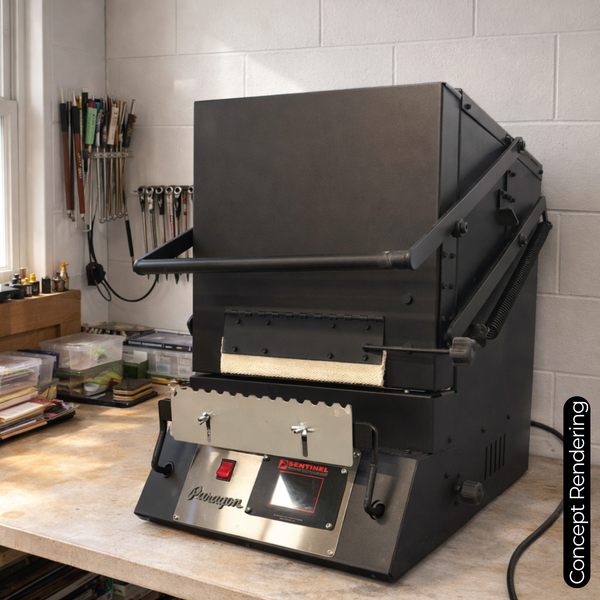
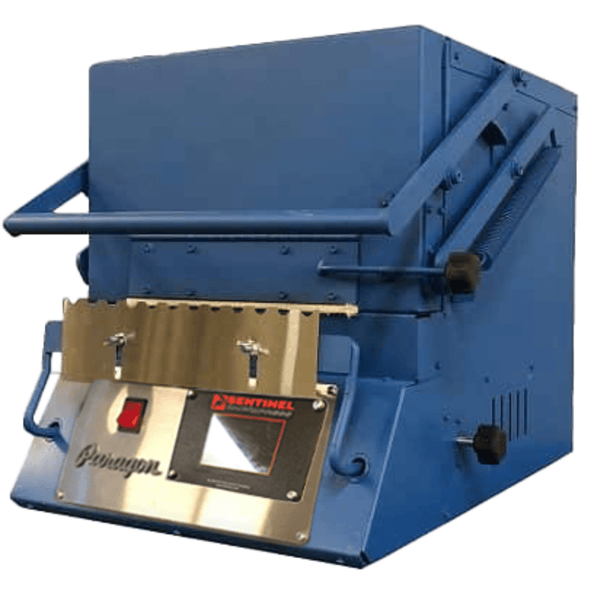
Paragon SC2 Jewelry & Glass
- 8 x 7.75 x 5.75 in, 0.21 cu ft
- 2000F max, the hottest here
- 120V, 14A, 1680W
- Front-loading, side-fired elements
$1,440$1,600
View Details

Hot Shot HS-12G
- 12 x 12 x 6 in chamber
- 1700F max
- 120V, 15A, front-opening clam shell
$1,852$2,088
View Details
Mid format: 14 to 15 inches

Olympic Champ XL
- 14.5 x 14.5 x 6 in chamber
- 1700F max, lid element for fusing
- 120V, 15A, 20A breaker
$1,305$1,725
View Details

Olympic Square 149GFE
- 14.5 x 14.5 x 9 in chamber
- 1700F max, lid plus body elements
- 240V, 15A, 20A breaker
$1,386$1,825
View Details

Evenheat Studio Pro 14
- 14.5 x 14.5 x 6.5 in, 0.80 cu ft
- 1650F max, elements in the lid
- 120V, 15A, front and top access
$2,024$2,530
View Details
Large format: 16 inches and up
Hot Shot HS-16G
- 16 x 16 x 6 in chamber
- 1700F max
- 120V, 15A, front-opening clam shell
$2,446$2,718
View Details

Evenheat Studio Pro 17
- 17 x 17 x 6.5 in, 1.10 cu ft
- 1650F max, elements in the lid
- 120V, 18A, 20A breaker required
$2,480$3,100
View Details

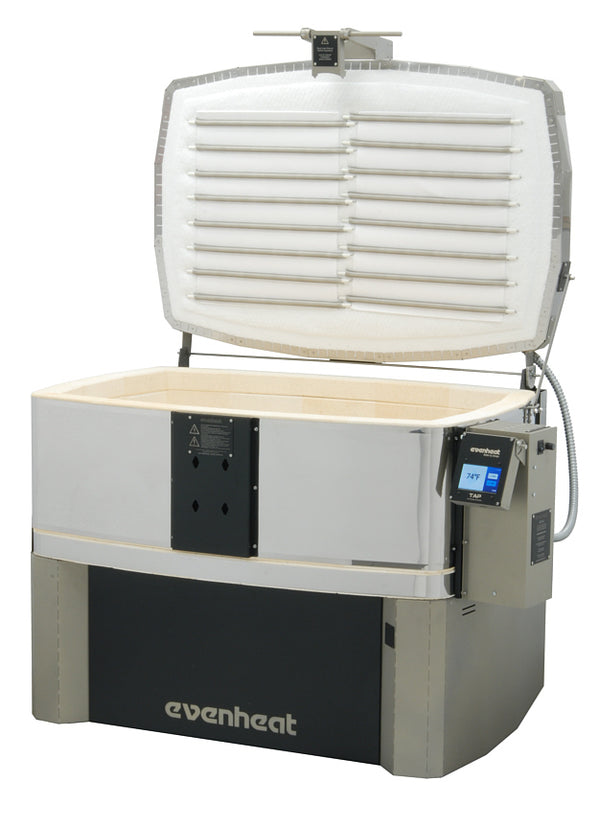
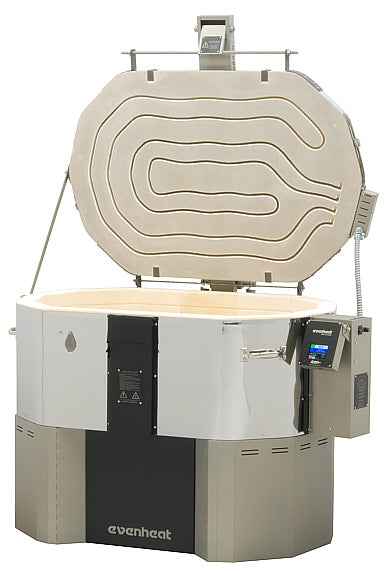
Evenheat GTS 23
- 23.5 in diameter x 13.5 in deep, 3.5 cu ft
- 1800F max
- 240V, 30A, NEMA 6-50 plug
$3,572$4,465
View Details