

Kiln Wash & Consumables
Kiln wash, cement, lid coat and ceramic paper. The cheap things that protect the expensive ones.


Kiln Wash & Consumables
The cheap things that stop the expensive things going wrong
Kiln wash keeps glaze off your shelves. Cement fills the cracks that open up in a brick wall. Lid coat stops a lid shedding grit onto your work. Ceramic paper separates anything you do not want fused. None of it costs much and all of it saves something that does.
4Consumables
2Brands
$19Flat Shipping
Buying Guide
Kiln wash is the cheapest insurance in the studio
A kiln shelf is a substantial piece of refractory and it takes one glaze run to ruin it. Kiln wash is a thin refractory coat brushed onto the top face of the shelf so that anything which runs sits on the wash rather than on the shelf, and comes off with it.
It is applied as a thin slurry, two or three coats, each brushed at right angles to the last, and left to dry before firing. It wants to be thin: a thick coat flakes and the flakes land on your pots. Wash the top face only, never the underside, and never the kiln floor edge-to-edge if you want to keep the floor.
Cement and lid coat solve the other half of the problem. Cement fills the cracks that open in a brick wall as it ages. Lid coat is brushed over the underside of a lid that has started to shed, which is what causes the grit landing in glaze that nobody can explain.

Why buy your consumables from us
Authorized Olympic and Cress dealer.
We confirm the part against your serial
Send us the model and serial from the kiln's plate and we will tell you exactly which part it takes before you order.
We will tell you if you do not need it
Not every problem is a cement problem. A stable hairline crack in a brick wall does not need filling, and we would rather say so than sell you a quart of cement.
Flat $19 shipping per order
One flat rate anywhere in the US however many items are in the cart, so it is worth ordering spares at the same time.
Price match guarantee
Find the same part advertised for less by an authorized dealer and we will match it. Details on our price match page. No sales tax outside Georgia.
What each one does
Four products, four different jobs.
| Product | What it is for |
|---|---|
| Kiln wash | A refractory coating brushed onto the top face of a shelf so running glaze sits on the wash instead of the shelf. Available in a 1 lb bag for occasional use and a 5 lb bag for a studio that washes shelves regularly. |
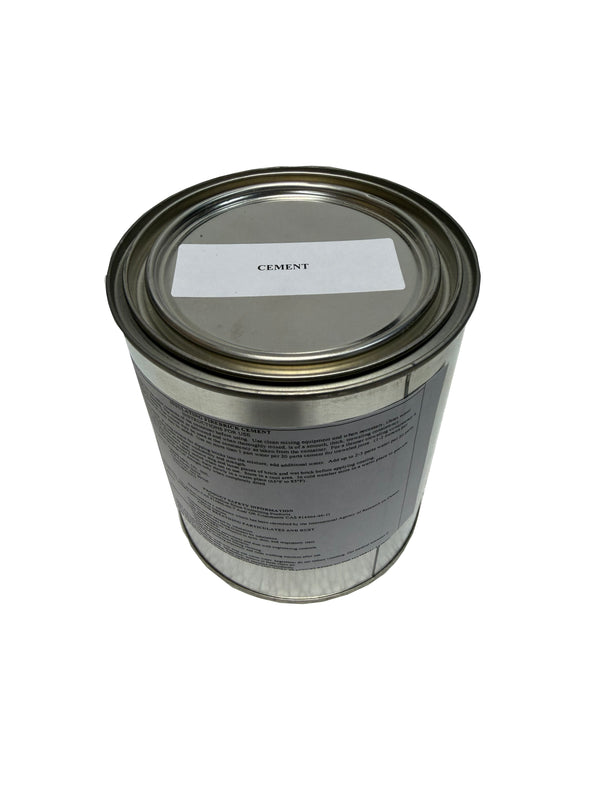
| Kiln cement | A patching compound for cracks and gaps in the brick lining. Sold by the quart, which goes a long way on a hobby kiln. |
| Lid coat | Brushed over the underside of a lid that has begun to shed grit. Stops the shedding without rebuilding the lid. |
| Ceramic paper | A thin refractory paper used as a separator — between a piece and a shelf, between two surfaces that must not fuse, or as a soft gasket. Cuts with scissors. |
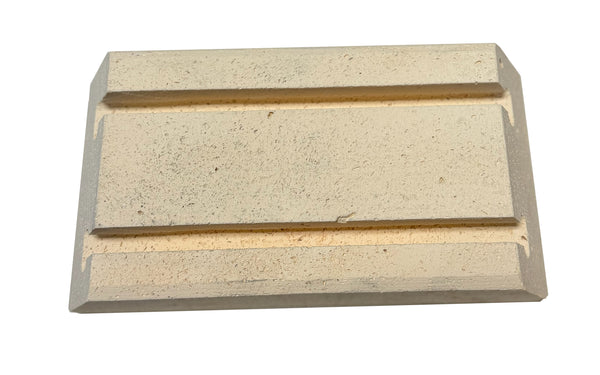
| Replacement brick | Cress sell individual shaped bricks by chamber shape and brick type, which also live in Bricks, Floors & Bottoms. Cement for a crack, a new brick for a crumble. |
Thin coats, always. The most common mistake with both wash and lid coat is putting it on too thick. A thick coat flakes, and the flakes land in your glaze.
THIN
COATS
Wash the shelf, not the kiln
Wash goes on the top face of a shelf. It does not go on the underside, where it does nothing except flake off onto whatever is below, and it does not go on the walls.
The kiln floor is the one judgement call. Washing it protects it from spills, but any wash on a floor will eventually flake, and flakes on a floor migrate upward through the load. Many potters fire a sacrificial shelf on the floor instead.
Let each coat dry fully before the next, and brush each at right angles to the one below. That is the whole technique.
The things the consumables protect
Shelves, lids and brick, in that order.
Related collections
Other ways into the same catalogue.
Kiln wash and cement FAQs
The questions we get asked on the phone most often.
How often should I re-wash a shelf?
When the existing coat starts to look patchy or has been chipped away in places, which for most studios is every several firings rather than every one.
If a glaze has run and you have had to chip wash off to clean it up, re-wash that area before the shelf goes back in.
Can I put kiln wash on the kiln floor?
You can, and it protects the floor from spills, but it will eventually flake, and flakes on the floor work their way up through the load.
A sacrificial shelf sitting on the floor is the alternative, and in a kiln that fires glaze regularly it is usually the better one.
What is the difference between kiln cement and lid coat?
Cement is a patching compound for a crack or a gap in a brick wall. Lid coat is a surface treatment for a lid that has begun to shed.
They are not interchangeable. Cement on a shedding lid is far too heavy, and lid coat in a crack will not hold.
Do I need to fill every crack in the brick?
No, and filling them all is a good way to waste an afternoon. Insulating firebrick cracks as a matter of course because it is a soft material that cycles to cone temperature and back.
Fill a crack that is opening up, letting heat through, or shedding material. Leave a stable hairline alone.
What is ceramic paper used for?
As a separator. It sits between two things that must not fuse, between a piece and a shelf where a glaze might run, or as a soft refractory gasket.
It cuts with ordinary scissors and burns out cleanly, which is why glass workers use a great deal of it.
How is it shipped?
Flat $19 per order anywhere in the US, however many items are in the cart. Everything on this page qualifies. Full terms on our shipping page.