
A kiln does not arrive in a van. It arrives on a pallet, on a truck with a tail-lift, driven by someone who will put it at the end of your driveway and hand you a clipboard. Nobody tells you that before you order, and it is the part of buying a kiln that goes wrong most often. Here is exactly what happens between you clicking buy and the kiln sitting in your studio, and the five minutes on delivery day that decide whether a freight claim is easy or impossible.
The short answer
- It ships LTL freight, not UPS. A different kind of carrier, a different kind of delivery, and the carrier phones you to book a time.
- Curbside means curbside. The liftgate puts the pallet on the ground. Getting it inside is yours to arrange.
- Measure first. Doorways, the path, and whether a 53 ft trailer can physically reach you.
- Inspect before you sign. Photos before you unwrap anything, and write damage on the delivery receipt. This is the whole ballgame.
- Do not book the electrician yet. Wait until the kiln is on the ground and inspected.
Weights below are manufacturer shipping weights. Freight rates depend on size and destination and are shown at checkout.
Why a kiln ships differently to everything else you buy
Parcel carriers like UPS and FedEx have a ceiling — in practice around 150 lbs per package, and a size limit well below the footprint of a pallet. The smallest kiln we sell clears that comfortably. Most do not.
So kilns move by LTL, which stands for less-than-truckload. Your kiln shares a trailer with other people's freight, gets handed between terminals along the way, and is delivered by a driver whose job is the truck and the liftgate, not your studio. That hand-off model is why freight tracking updates in large jumps rather than every few hours, and why a kiln can sit at a terminal 40 miles away for two days without anything being wrong.
It is also why the delivery is an appointment rather than a surprise. Once your kiln reaches the destination terminal, the carrier contacts you to schedule a time. Which means the phone number on your order has to be a number you will actually answer. A wrong or unanswered number is the single most common cause of a delayed kiln, and it generates storage fees while it sits.
How much does a kiln actually weigh?
More than people expect, and the spread is enormous. These are Olympic's own published shipping weights, and they are the best illustration we have because the range covers almost every situation a buyer might be in.
| Model | Format | Capacity | Shipping weight |
|---|---|---|---|
| 139FLE | Front-loading | 0.48 cu ft | 75 lbs |
| 1818HE | Top-loading | 2.63 cu ft | 185 lbs |
| 189 Slider | Sliding floor | 1.69 cu ft | 190 lbs |
| 1818FLE | Front-loading | 1.95 cu ft | 195 lbs |
| 2327HE | Top-loading | 7.0 cu ft | 350 lbs |
| 2831HE | Top-loading | 11.67 cu ft | 415 lbs |
| FL4.5E | Front-loading | 4.5 cu ft | 740 lbs |
| FL5.5E | Front-loading | 5.5 cu ft | 750 lbs |
| FL8E | Front-loading | 8.0 cu ft | 1,065 lbs |
| FL12E | Front-loading | 12.0 cu ft | 1,165 lbs |
The number that surprises everybody
Look at the 2327HE and the FL8E. Seven cubic feet against eight — near enough the same kiln, capacity-wise. 350 lbs against 1,065 lbs. Three times the weight for one extra cubic foot.
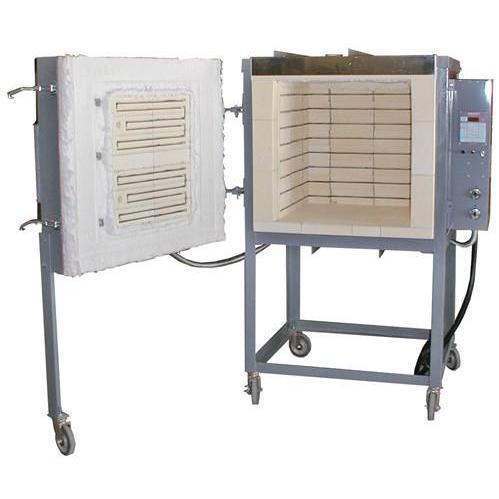
That is not a mistake. A front-loader carries 4.5 in of brick plus an inch of fibre where the top-loader carries 3 in of brick, and it needs a steel frame and a hinged door to hold all of that up. The insulation is why front-loaders hold heat well and fire efficiently. It is also why they are a different proposition entirely on delivery day.
A 185 lb top-loader is a pallet two reasonably strong people can shift with a hand truck and some patience. A 1,065 lb front-loader is not. It needs a pallet jack on a hard flat surface, or a few people who know what they are doing, or an appliance dolly and a plan. If you are weighing the two formats against each other, our guide to top-loading versus front-loading kilns covers the price and performance side; this is the logistics side of the same decision.
What actually happens, start to finish
1. You order, and we check it before anything moves
For kiln and large equipment orders we review the details before the order is processed — voltage, phase, shipping address, freight accessibility, configuration, options, current lead time. If something looks wrong we contact you first. This exists because a kiln is an expensive thing to order on the wrong voltage, and the catch rate is worth the day.
You also have a 24-hour cancellation grace period with no fee. Wherever possible, made-to-order equipment is not submitted to the manufacturer until that window has passed. Use it to double-check voltage and phase with your electrician.
2. It gets built
Most kilns are built to order rather than pulled off a shelf. Lead time depends on manufacturer, model, configuration, controller and the factory's current schedule. If you need equipment by a specific date, tell us before you order and we will check the latest estimate with the factory. Our guide to quick-ship versus made-to-order kilns covers what you give up to get one faster, and there is a quick-ship collection if speed is the deciding factor.
3. It ships, and tracking goes quiet
Tracking information comes to the email on your order. Freight tracking updates less often than parcel tracking — expect movement between terminals rather than hourly scans. Quiet is normal.
4. The terminal calls you
When the shipment reaches your local terminal, the carrier contacts you to arrange delivery. This is the step that depends entirely on your phone number being right.
5. Delivery day
Someone needs to be there — not to lift anything, but to look at the shipment and sign for it. More on that below, because it matters more than anything else on this page.
Curbside means curbside
This is the expectation gap that causes the most disappointment, so we would rather be blunt about it.
Standard freight delivery is curbside. Liftgate service is included when required on eligible kiln shipments, and what a liftgate does is lower the pallet from the trailer bed to ground level. That is where the carrier's job ends.
The driver is not responsible for:
- Moving the kiln into your home, garage, studio or business
- Taking it up or down steps
- Uncrating or unpacking it
- Assembly or installation
- Removing the pallet or packaging
Some drivers are generous with their time. Plenty are not, and they are within their rights either way. Plan as though yours will do exactly what the paperwork says, and treat anything more as a bonus.
If you genuinely cannot get the kiln from the curb to where it lives, that is a solvable problem — but it is solved before you order, not on the day. Inside delivery and white-glove service exist and can be arranged; they need quoting in advance because they are not part of standard freight.
Measure before you order, not after
Three measurements, and they take ten minutes.
The truck's path. An LTL truck is substantially bigger than a parcel van and may be a 53 ft trailer. Can it get down your road, turn around, and stop safely? Narrow lanes, low branches, steep or unpaved driveways, gated communities and tight cul-de-sacs are all real obstacles. If you are unsure, tell us before ordering — we would far rather sort it out in advance than have a truck arrive and fail.
The route from curb to studio. Measure the narrowest point. Doorways, hallway corners, the gap between the garage door track and the car. Remember the kiln will often be on a pallet while you move it, which adds height, and a front-loader on its stand is wider than the chamber suggests — the FL8E runs about 46 in across with the stand.
The spot itself. Kilns need clearance from walls and combustibles, and if you are adding a vent, the fan needs somewhere to live and a route to an outside wall. Our kiln vent guide covers that, and the electrical requirements guide covers what the circuit needs to be.
The five minutes that matter most
Freight damage is uncommon. When it happens, whether you are covered comes down almost entirely to what you do in the few minutes before you sign the delivery receipt.
Before you sign:
- Inspect the packaging and the pallet carefully. Crushed corners, punctures, dents, broken pallet boards, torn shrink wrap, anything missing.
- Take photos before you remove any packaging. Wide shots and close-ups. Photograph the pallet, all four sides, and the delivery receipt itself.
- Note any visible damage on the delivery receipt, in writing, before you sign it.
If the shipment has significant visible damage, you may refuse delivery. Write exactly this on the receipt:
"Refused due to freight damage."
Then contact us with the photos.
The reason this is worth labouring: signing a clean delivery receipt for a visibly damaged shipment is, in effect, you telling the carrier it arrived fine. Undoing that afterwards is difficult. Do not sign for a damaged shipment as received in good condition, and if the damage looks minor or you are not sure whether to refuse, document it on the receipt anyway and sign. Documented and accepted is a position you can work from. Undocumented is not.
The driver may be in a hurry. Take the time anyway — it is your signature and your kiln.
Damage you find later
Sometimes the crate looks fine and the problem only appears once the kiln is unpacked — a cracked brick, a bent element, a controller that took a knock. That is concealed damage, and it is handled.
Contact us as soon as you find it, and keep every scrap of packaging until the claim is settled. Photograph the equipment, the damaged area specifically, the packaging, the pallet or crate, and the delivery receipt. Do not throw the crate away to clear the garage — that packaging is evidence.
What costs extra, and how to avoid it
Freight carriers charge accessorial fees for situations outside a standard delivery. These come from the carrier, not from us, and they are the customer's responsibility when they result from a missed appointment, a wrong address or a requested change. They are also almost entirely avoidable.
| Charge | What triggers it | How to avoid it |
|---|---|---|
| Redelivery | Nobody there at the appointment | Be there, or reschedule in advance |
| Storage | Freight sits at the terminal waiting on you | Answer the scheduling call promptly |
| Address correction | Wrong or incomplete address | Check it at checkout |
| Reconsignment | Changing the destination after shipping | Confirm the address before it ships |
| Limited access | Restricted roads, remote sites, hard access | Tell us about it before you order |
| Inside delivery | Needing it past the curb | Arrange and quote it in advance |
A custom freight quote is sometimes needed rather than the standard flat rate — oversized or exceptionally heavy kilns, custom-built equipment, Alaska and Hawaii, U.S. territories, Canada and international, islands and ferry-access addresses, and genuinely remote or limited-access properties. If your order needs one, we contact you before it is processed. We will not quietly add a freight charge you did not agree to.
Shelves and accessories are their own shipment
Two things worth knowing if you ordered a kiln and furniture together.
First, they often arrive separately. Smaller accessories and parts may ship by parcel carrier while the kiln moves by freight, and they will not necessarily turn up on the same day. An order that arrives in two pieces is normal, not a mistake.
Second, a furniture kit is not a small box. Kiln shelves are dense. A large Olympic furniture kit runs to around 220 lbs — a pallet in its own right, with its own freight considerations. That is one of the arguments for buying furniture with the kiln rather than afterwards, and it is why our Ready-to-Fire kits exist: shelves, posts and wash matched to your model on one order. Our guide to what kilns do and do not come with covers what you need alongside the kiln.
Do not book the electrician yet
This is the piece of advice we give most often and the one people most often ignore.
Wait until the kiln has been delivered and inspected before you schedule electricians, contractors, installers, classes or a studio opening. Production schedules move. Freight transit times move. Weather happens. An electrician booked against an estimated delivery date is a call-out fee waiting to be wasted, and a class advertised against one is a harder conversation.
Get the kiln on the ground, open it, confirm it is what you ordered and undamaged. Then book the trade.
You can absolutely do the preparation in advance — have the circuit specced, know what the breaker and wire need to be, have a quote in hand. It is the appointment itself that should wait.
Two things about our policies worth knowing before you order
Most freight pages stop at delivery. These two are about what happens after, and they are unusual enough to be worth stating plainly.
The return window runs from delivery, not from purchase. Return requests on equipment must be submitted within 30 days of delivery. A kiln can spend weeks in production and transit, and we do not think the time you have to decide should be eaten by waiting for a truck.
The manufacturer-recommended first test firing does not void return eligibility. A kiln that has only completed its recommended initial test firing can still be considered for return, provided it followed the manufacturer's procedure, has not been used for production firings, and is otherwise undamaged and unmodified. The first firing is how you find out whether the kiln works properly. Losing the right to return it by performing the test the manufacturer asks for makes no sense to us.
Returns need written approval and a Return Authorization number before anything ships back, restocking fees apply, and freight damage is a separate and much more time-sensitive process than a return. The full detail is on our returns page.
Which situation are you in?
Small kiln, suburban house, normal driveway
This is the easy case. A 75 to 200 lb pallet, a liftgate, and a hand truck will get you there with one helper. Be home, inspect before signing, and you are done.
Mid-size top-loader, 350 to 415 lbs
Still manageable, but not alone. Two or three people, an appliance dolly, and a flat route. If there are steps between curb and studio, plan those specifically — steps are where most of the risk is, for the kiln and for you.
Front-loader, 740 lbs and up
Plan this one properly. A pallet jack needs hard flat ground; grass and gravel defeat it. Consider whether inside delivery is worth quoting, and think about whether the route can take the width with the stand on. This is the case where a ten-minute conversation before ordering saves a very bad afternoon.
School, college or institution
You likely have a loading dock, which makes the delivery itself the easy part. The thing to get right is that whoever receives it knows to inspect and document before signing — often that is facilities staff rather than the art department. Tell them. Our guide to kilns for schools covers the purchasing side, and we take purchase orders through our commercial quotes page.
Rural, remote, or hard to reach
Call us before you order. Narrow roads, long unpaved drives, ferry access and seasonal access are all workable, but they need arranging rather than discovering. This is exactly the situation accessorial charges exist for, and a conversation in advance usually avoids them.
Frequently asked questions
Will they bring the kiln inside?
No, not on standard freight. Delivery is curbside, and the liftgate brings the pallet to ground level. Moving it from there is yours to arrange. Inside delivery can be quoted separately — ask before you order.
Do I need to be home for the delivery?
Yes. Someone needs to receive the shipment, inspect it and sign for it. If nobody is available at the scheduled appointment the carrier may charge redelivery and storage fees.
How long does freight delivery take?
Transit is only part of the answer — most of the wait is production, since most kilns are built to order. Once it ships, LTL transit across the country is typically several days, plus the time to schedule the appointment after it reaches your terminal. Any lead time shown on the site is an estimate unless we have said otherwise in writing.
What if my kiln arrives damaged?
Photograph it before you remove any packaging, write the damage on the delivery receipt before signing, and contact us. If the damage is significant you can refuse the shipment with "Refused due to freight damage." written on the receipt. For damage you only find after unpacking, contact us straight away and keep all the packaging.
Is liftgate service included?
Liftgate service is included when required on eligible kiln shipments. If you have a loading dock you will not need one.
Can a freight truck reach my house?
Usually yes, but not always — the truck may be a 53 ft trailer. If your road is narrow, your driveway is steep or unpaved, or access is restricted in any way, tell us before ordering and we will work out the best approach rather than finding out on the day.
Why is my tracking not updating?
Freight tracking updates less frequently than parcel tracking, usually as the shipment moves between terminals. Long quiet stretches are normal. When it reaches your local terminal the carrier will contact you directly.
Talk to us before you order, not after
Freight is the part of buying a kiln that nobody has done before, and it is much easier to solve in advance than to unpick afterwards. Tell us the model you are considering and your delivery address, and we will tell you what the delivery will actually look like — whether the truck can reach you, whether you will need help on the day, and whether anything about your situation needs quoting rather than flat-rating.
We publish our freight charge at checkout rather than hiding it in the product price, we take purchase orders from schools and institutions, and we price match other authorised dealers. Get in touch or call or text (470) 264-3563.
Full detail on freight, access, damage and lead times is on our shipping page. If you are still choosing a kiln, the kiln finder narrows it down by what you make, and what size kiln do I need is the place to start on capacity.