
 Save $217.00
Glass Annealing Kilns
Compare kilns by craft, chamber size, and the power available in your studio.
Save $217.00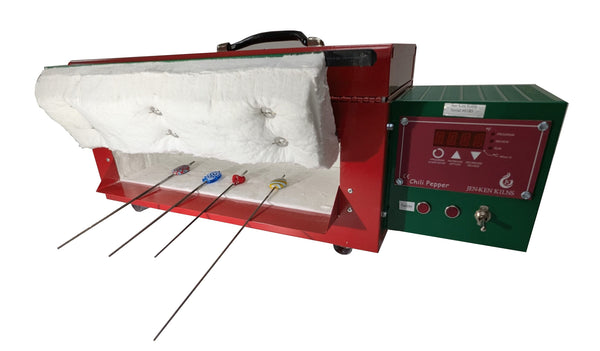 Save $236.00
 Save $620.00
 Save $512.00
 Save $380.00
Annealing, not fusing
Kilns built to hold a soak and come down slowly
An annealing kiln's job is the cool-down. Hot glass that drops through its strain point too quickly carries stress it will release later — usually as a crack, often weeks after the piece left the bench. Every kiln on this page runs a programmable controlled ramp down, which is what separates an annealer from a kiln that simply gets hot.
Lampwork & beadmaking
Beads come off the mandrel hot and need to go straight into a kiln already at temperature. Bench-top 120 V units plug into a standard outlet and sit beside the torch.
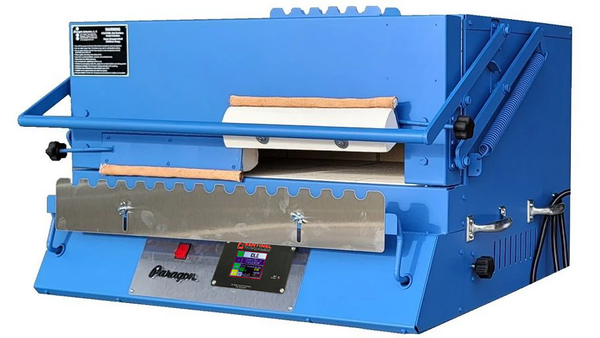
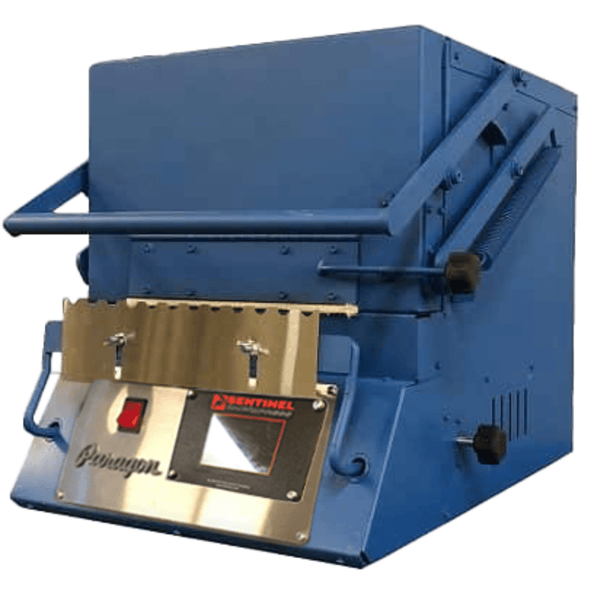
Look at: Paragon BlueBird XL, Paragon F120, Jen-Ken Chilipepper.
Blown & sculptural work
Larger pieces need chamber depth and a kiln that can hold a long soak without drifting. These are 240 V and usually want a dedicated circuit.
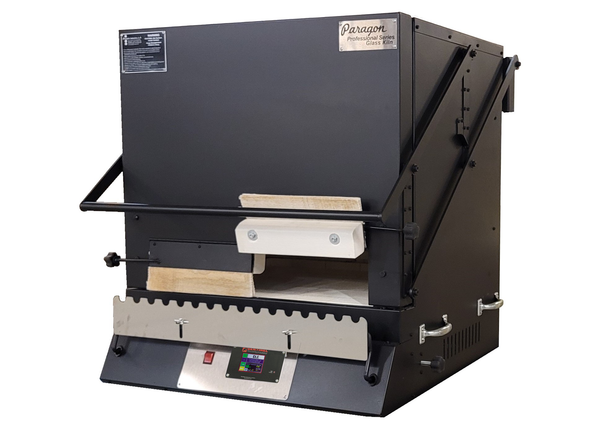
Look at: Paragon F200, F240, F500 and F500 Pro.
Front-loading cabinets
A door rather than a lid means you can load shelves at working height and reach in without leaning over hot brick.
Look at: Hot Shot 18A Annealing Cabinet, Jen-Ken Chilipepper.
Three things worth settling before you order
- Your power. 120 V models run from an ordinary household outlet. 240 V models need an electrician and a dedicated circuit — worth pricing before the kiln arrives, not after.
- Chamber size against your largest piece. Annealing wants air around the work. A chamber that only just swallows your biggest piece will anneal it unevenly.
- The controller. Annealing is a programmed schedule, not a dial setting. Every kiln here takes a multi-segment program so you can set soak temperature, hold time and ramp-down rate and leave it.
Authorized Paragon, Hot Shot & Jen-Ken dealer
Flat-rate freight shipping
No sales tax outside Georgia
Spare parts and elements stocked